Water justice means that access to safe water and sanitation is treated as a right, not a privilege — shared fairly, regardless of where you were born or how much you earn. Across Africa, that justice is still out of reach for many. And the people with the most at stake are also the most numerous: the young.
The youngest continent, on the front line
Africa is the world's youngest continent, with a median age far below the global figure. Young people are the largest demographic almost everywhere — and they are the ones who will live longest with the consequences of today's water decisions. When taps run dry or rivers flood, it is young lives, schooling, and livelihoods that are reshaped.
How the water gap shows up in young lives
The cost of unsafe water and poor sanitation is rarely just about water. It cascades:
- Health: preventable, water-related illness keeps children out of classrooms and adults out of work.
- Education: hours spent collecting water are hours not spent learning — a burden that falls heavily on girls.
- Opportunity: unreliable water holds back farms, small businesses, and whole local economies.
Why youth leadership is not optional
African challenges call for African solutions, and the continent's largest generation cannot be a spectator to a crisis it will inherit. Young people bring urgency, lived experience, and new ideas — but they need platforms, skills, and a seat at the table to turn that energy into policy and practice.
What AYWF does about it
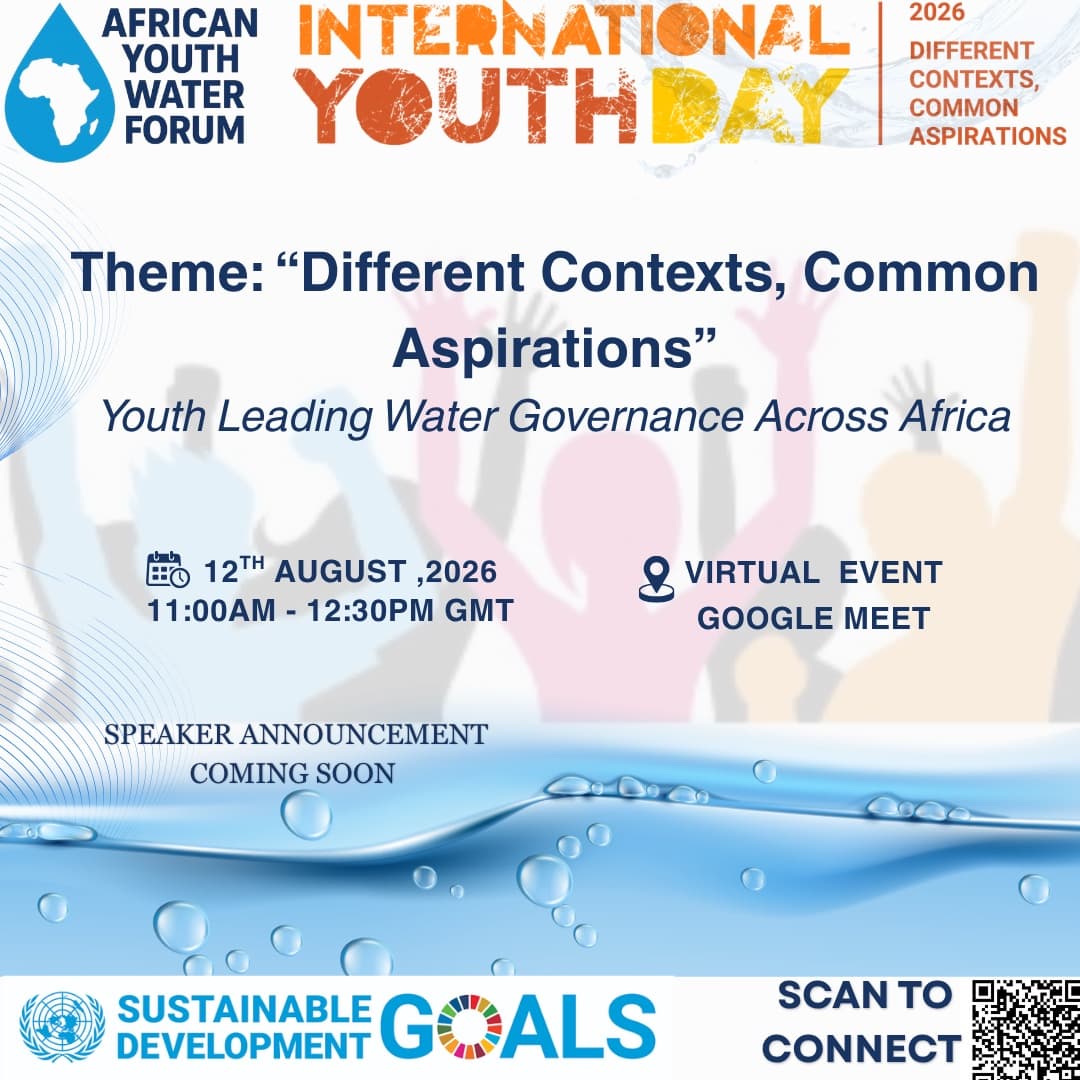
The African Youth Water Forum exists to put young people at the centre of the continent's water agenda — connecting their voices, building their skills, and channelling them into an annual African Youth Water Declaration that decision-makers cannot ignore.
Water justice is a youth issue because young Africans are both the most affected by the crisis and the best placed to solve it.